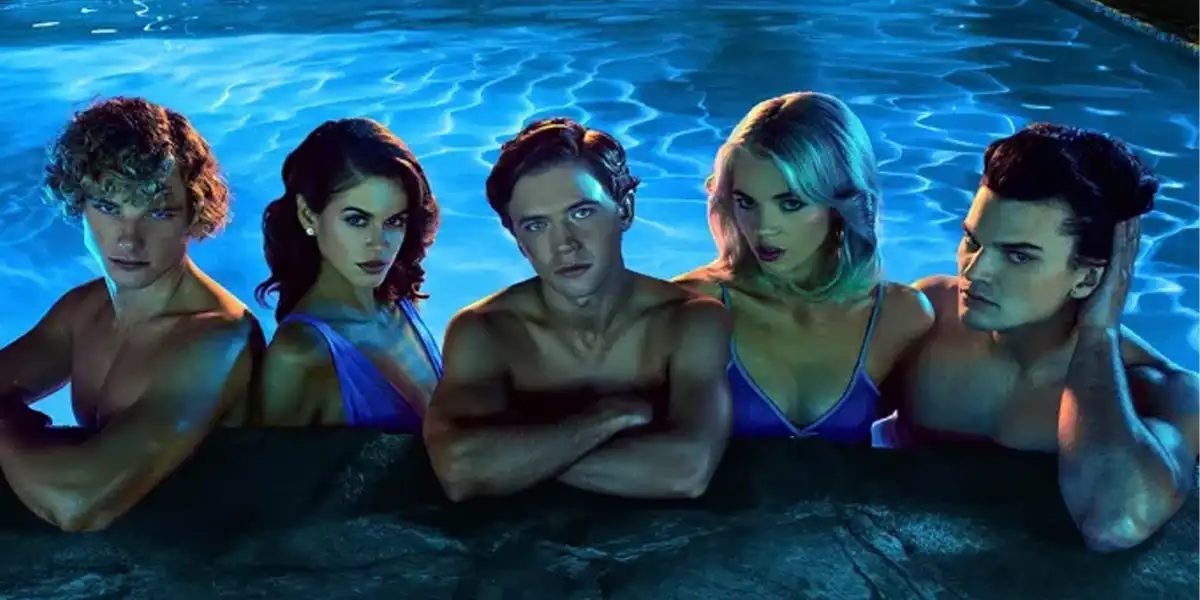
When author Bret Easton Ellis originally drafted his semi-autobiographical 2023 novel The Shards, he spent months locked in his apartment listening obsessively to the exact radio hits and cassette tapes of his senior year in 1981. For Ellis, pop music was never decorative background noise; it was an emotional time machine and a psychological defense mechanism against the terrifying reality of youth in late-20th-century America. In FX and Hulu's eight-episode television adaptation created alongside Ryan Murphy and directed by Max Winkler, the central question for fans and critics was straightforward: could the television series capture that same intoxicating, dread-soaked musical spirit? Now that the debut season has concluded its run, the verdict is undeniable: the soundtrack of The Shards is one of the most meticulously curated and emotionally jarring sonic experiences of 2026.
Rather than serving up a generic collage of familiar 1980s tropes, the musical supervision and original score function as two sides of a fractured psyche. On one hand, you have the shimmering decadence of Los Angeles prep school privilege; on the other, the suffocating paranoia of a predatory serial killer known as The Trawler stalking teenage prey through the Hollywood Hills.
Sunlit Hedonism and the Illusion of Safety
The opening chapter wastes no time establishing the opulent, sun-bleached aesthetic of the Buckley school elite. When we first meet 17-year-old Bret (Igby Rigney) and his wealthy friends Susan (Kaia Gerber), Thom (Graham Campbell), and Debbie (Hayes Warner), the soundtrack immediately envelops them in The Cars' hypnotic 1978 cut 'Moving In Stereo'. The pulsing electronic groove feels effortlessly cool, yet its mechanical repetition hints at the emotional detachment that defines their world.
That false sense of teenage invulnerability is reinforced throughout the early episodes by the buoyant sunshine-pop of The Go-Go's, who make multiple appearances across the season with tracks like 'This Town' and 'Our Lips Are Sealed'. Hearing upbeat California New Wave layered over convertible joyrides along Mulholland Drive creates a deceptive feeling of safety. But director Max Winkler constantly undercuts that brightness. As party sequences dissolve into drug-fueled trances, the sonic palette turns sharp and dissonant. Ultravox's haunting synth-ballad 'Vienna' and Duran Duran's 'Planet Earth' arrive not as celebratory dance cuts, but as somber eulogies for lost innocence.
Post-Punk Paranoia and Creeping Dread
What elevates the licensed tracklist of The Shards beyond mere era nostalgia is how deliberately each needle drop reflects Bret's spiraling mental state. When mysterious transfer student Robert Mallory (Homer Gere) arrives on campus, the music shifts toward darker post-punk textures. The Stranglers' baroque psych-rock masterpiece 'Golden Brown' plays during a suffocating poolside encounter, its harpsichord-driven tempo evoking a sluggish, narcotic dread.
As the mystery behind The Trawler's gruesome murders deepens in the mid-season episodes, the soundtrack leans into classics that weaponize psychological discomfort. Peter Gabriel's eerie 1980 anti-war single 'Games Without Frontiers' accompanies Bret's clandestine investigations into Robert's shadowy past, while The Human League's inescapable synth-pop juggernaut 'Don't You Want Me' takes on a sinister, possessive subtext during an unhinged country club celebration. Later, Stevie Nicks' chugging rock anthem 'Edge of Seventeen' and Blondie's bittersweet disco-punk hit 'Heart of Glass' showcase the desperate hedonism of kids trying to outrun their own mortality.
Troye Sivan and Leland: Analog Melancholy Meets Dark Pop
While the period-accurate needle drops provide historical texture, the true emotional anchor of The Shards lies in its original music. In a brilliant creative crossover, pop luminary Troye Sivan and acclaimed songwriter-producer Leland (Brett McLaughlin) joined forces to compose an evocative, analog-driven score that bridges authentic 1981 synth sensibilities with modern vulnerability.
Instead of relying on orchestral clichés or jump-scare stingers, Sivan and Leland utilize vintage analog synthesizers, tape-delayed reverbs, and moody arpeggios that capture the humid, claustrophobic atmosphere of nighttime Los Angeles. Their standout original contribution, including the hypnotic track 'LA Wants Me Dead', mirrors Bret's whispered internal monologue. Sivan's breathy, fragile vocal deliveries and minimalist drum programming give the show an intimate, queer melancholy that grounds the psychological horror in genuine heartache. It stands as one of the most successful pop-crossover scoring efforts on television this year.
The Final Cue: Nostalgia Weaponized as Dread
The Shards delivers a soundtrack that is far more than a playlist of vintage hits; it is a masterclass in how period music can be weaponized to tell a psychological horror story. By contrasting the radiant, carefree New Wave anthems of early-80s youth against Troye Sivan and Leland's desolate analog compositions, the series transforms California sunshine into an inescapable nightmare that lingers long after the credits roll.
For viewers eager to explore the complete catalog of era-defining hits, scene timestamps, and score tracks across all eight episodes, check out our comprehensive The Shards Season 1 Soundtrack Guide.
Season 1 Soundtrack Rating: 9.2 / 10